Winter tire storage: the complete guide for Canadian drivers
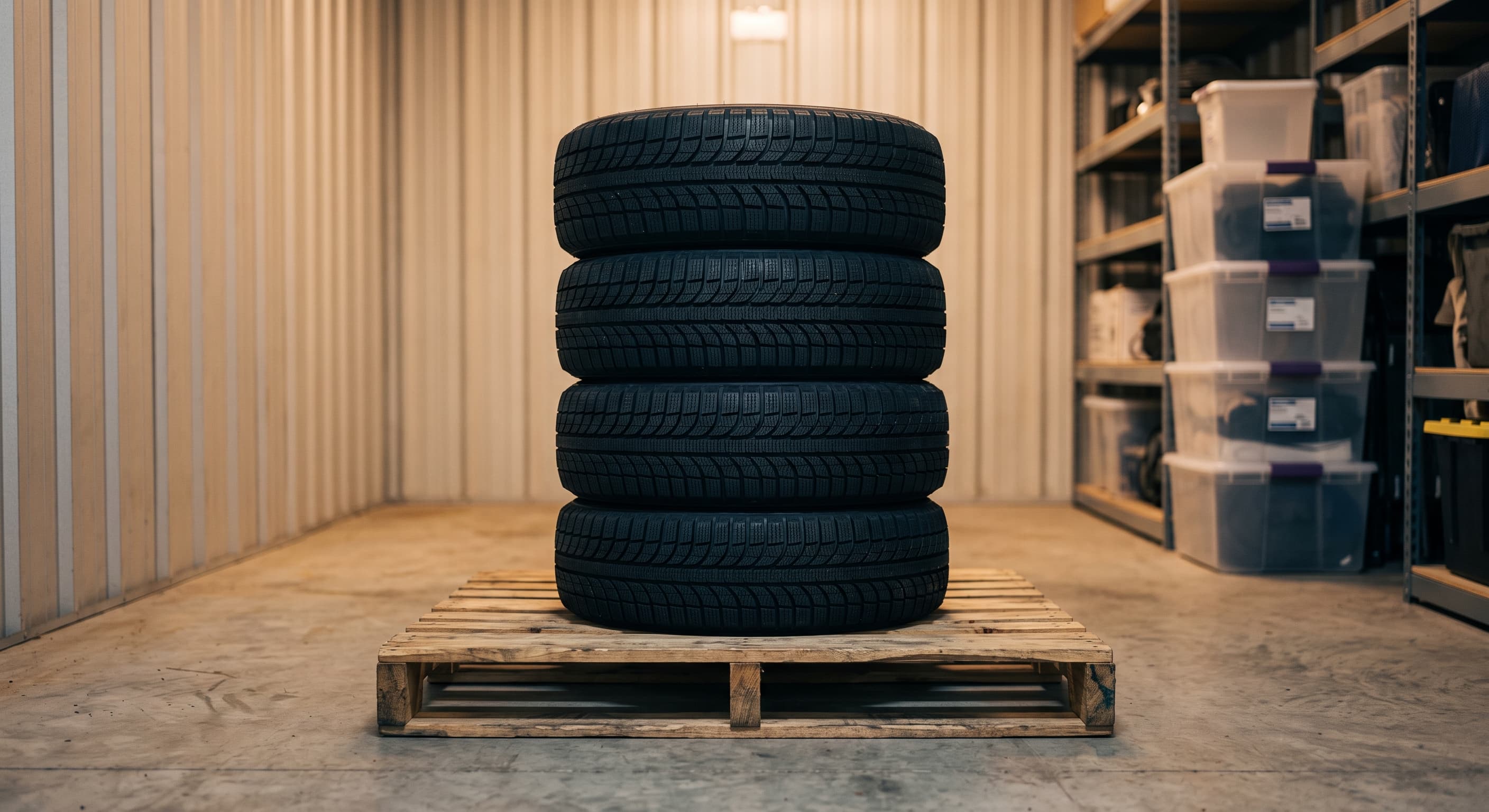
If you drive in Canada, you own two sets of tires for about six months of the year — and one of those sets is always in the way. Garage floor, hallway closet, the corner of a condo storage locker that was already too small. Twice a year you swap them, and twice a year you have to figure out where the other set goes.
Here's how to store winter (or summer) tires properly, and when it's worth moving them into a storage unit instead of living with them at home.
Clean and dry them before they go into storage
Road salt and grime left on tires over a Canadian winter will eat away at the rubber over months of storage. Before you put any tire away:
- Wash off all salt, brake dust, and road grime with soap and water.
- Let them dry completely — packing away damp tires invites mold on the sidewalls.
- If they're staying off the rims, mark each tire's position (LF, RF, LR, RR) with chalk so they go back on the same corner next season, which helps even wear.
Store them the right way up
How you stack tires matters more than most people think:
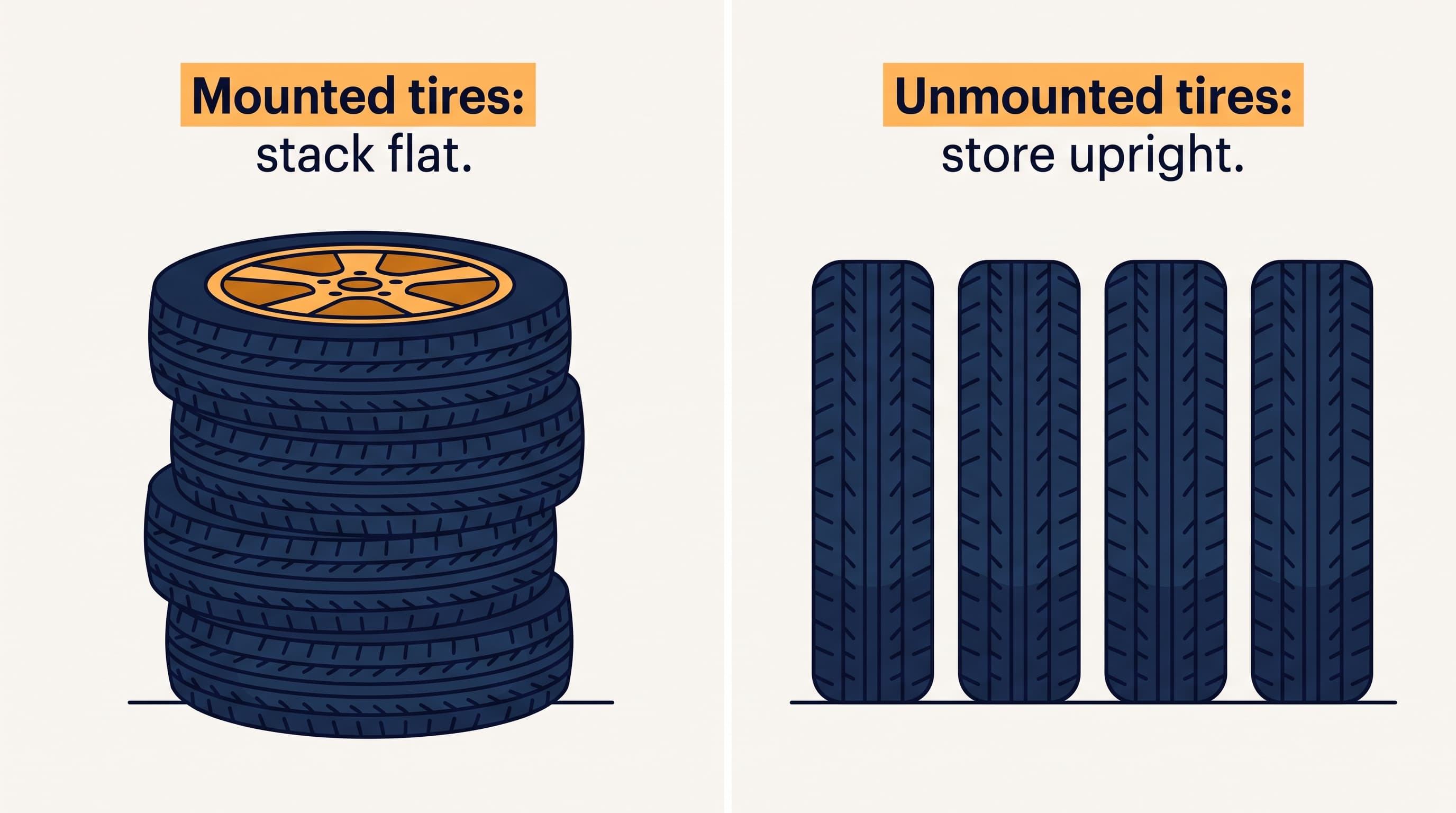
- On rims (mounted): Stack them flat, or hang them vertically. Stacking mounted tires flat and not moving them for months is fine — they hold their shape.
- Off rims (unmounted): Store them standing upright, not stacked flat. Unmounted tires stacked flat for months can develop flat spots or warp.
- Keep them off bare concrete. A thin sheet of plywood, a pallet, or even a few pieces of cardboard between the tire and the floor stops moisture from wicking up into the rubber.
Keep them out of direct sun and away from heat sources
UV exposure and heat both break down rubber compounds over time — it's the same reason tires left in a sunny driveway all summer age faster than ones kept in shade. A furnace, water heater, or any ozone-producing motor (some older garage door openers included) will do the same thing over months of storage. A storage unit avoids all of this by default: no windows, no appliances, consistent conditions.
Garage vs. storage unit vs. tire hotel
| Option | Cost | Convenience | Best for |
|---|---|---|---|
| Home garage / balcony | Free | You do the lifting | Houses with garage space to spare |
| "Tire hotel" (dealership/tire shop storage) | Often bundled with seasonal swap service | Highest — they swap and store for you | Drivers who want zero hassle and already get tires swapped professionally |
| Self storage unit | Low monthly cost, especially for a small unit | Good — 24/7 or scheduled access, drive-up options available | Condo/apartment dwellers with no garage, or anyone storing tires alongside other seasonal gear (patio furniture, ski equipment, holiday decor) |
If you're already paying for a storage unit — or considering one for other seasonal items — tires are one of the easiest things to add. Four tires take up surprisingly little floor space in even a small unit, and a drive-up unit means you're not carrying tires through hallways or up stairs.
Comparing storage options for your winter tires and everything else you're rotating seasonally?
Find storage near you →